
Sustainable Production in Lapland
Sustainable productions reduce their footprints via measuring tools, prioritizing eco-friendly travel options, utilizing the circular economy and by promoting climate-friendly lifestyles on screen.
The climate crisis currently underway is a call to action in all areas of life, and the TV and film industry is no exception. Here we detail how to join the fight and help keep the best Arctic backdrops beautiful and available for future generations of filmmakers and storytellers.
THE PLAN
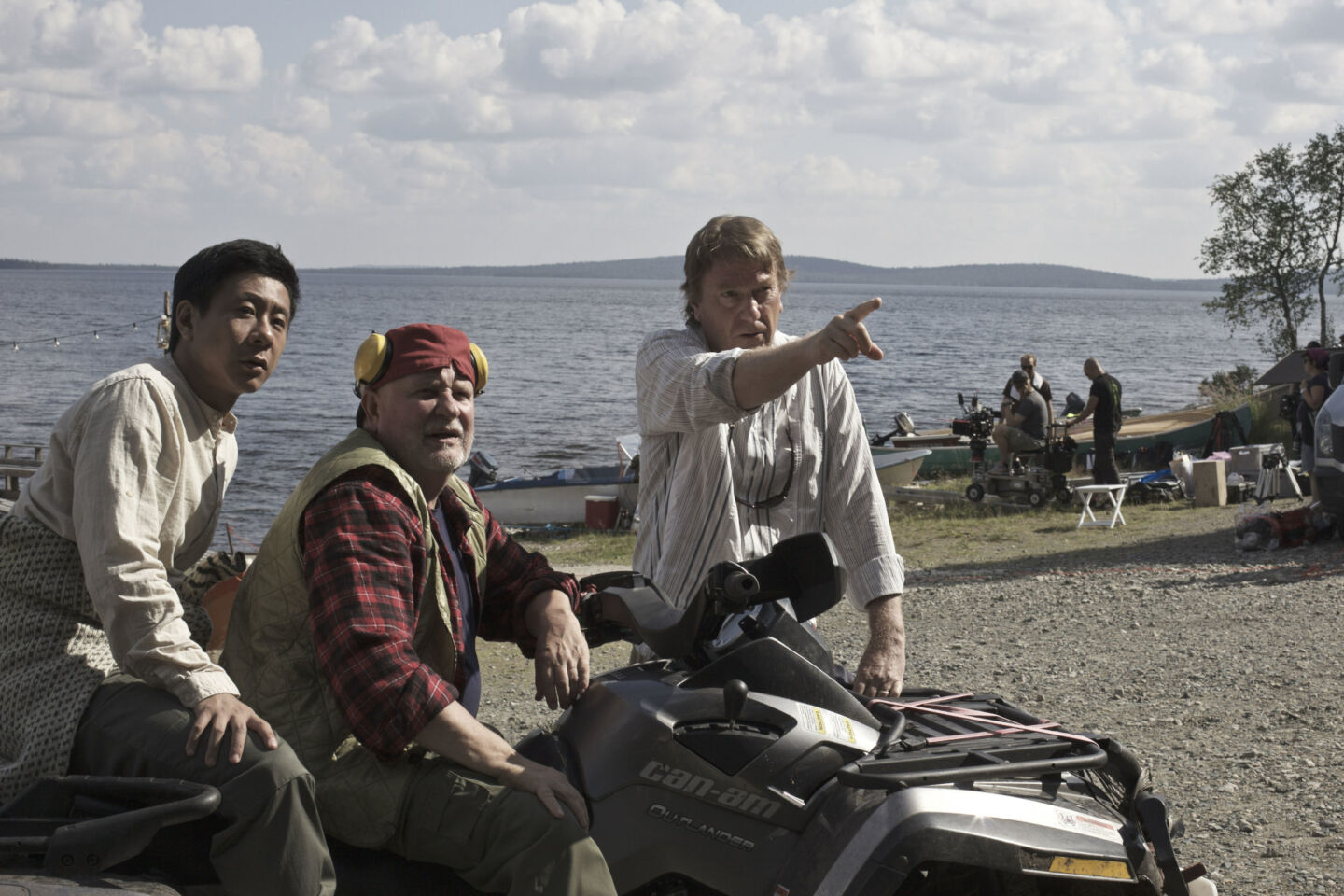
Photo by: Jouko Piipponen, Director Mika Kaurismäki on set of Master Cheng
A good plan is always the best place to start. When planning a sustainable production in Lapland, we turn to the Ekosetti guidebook for sustainable productions in Finland. They stress that your plan should start with ecological goals and clear communication to every department of your production on how to accomplish those goals. A simple example: if your goal is reducing waste on set, then everyone should know what, where and how to recycle during filming. In Finland, we recycle almost everything: paper, cardboard, container plastic, metal, glass, electronics … you name it. Timely communication about your goals also allows departments to give feedback and suggestions on sustainability goals.

Photo: Electric snowmobiles
For the majority of film and television production’s history, sustainability has not really been a concern. As this is a relatively new field for the industry, it can require a lot of research to ensure your goals are met (and are realistic to start with.) But as routines are established and cemented, sustainable production becomes second nature. One area where this is especially true are the partners you choose; those who are committed to their own sustainability goals and understand yours can grow into your sustainable production network.
MEASURING FOOTPRINTS

Photo by: Terhi Tuovinen
Finland has statistics on the environmental impact of Finnish audiovisual productions. First time in 2022, 23 productions and a consortium including Film Lapland supported a study on the environmental impact using the ALBERT toolkit executed by Audiovisual Producers Finland. ALBERT is an international training system with the goal of reducing the environmental impacts of productions and to create content that supports the vision of a sustainable future. Not to spoil the ending, but in the Finnish study, air travel was the villain all along, driving up productions’ emissions, as well as food choices such as beef. Head over to Audiovisual Producers Finland to see the stats and conclusions of the study. Or you can get started using ALBERT right now!
ALBERT is great for productions themselves, but when it comes to production and support service companies, the toolkits used for measuring their footprint are different. In the Green Toolkit, you can find the right calculator to pair the service companies with Finnish Lapland. Certifications are another way of keeping your environmental impact low; many, such as Sustainable Travel Finland and Ekokompassi, have requirements that already include measuring environmental impacts. Using certified companies gives you an idea, in quantifiable terms, of how much or how little your production has impacted the environment.
TRAVELS & LOCATIONS
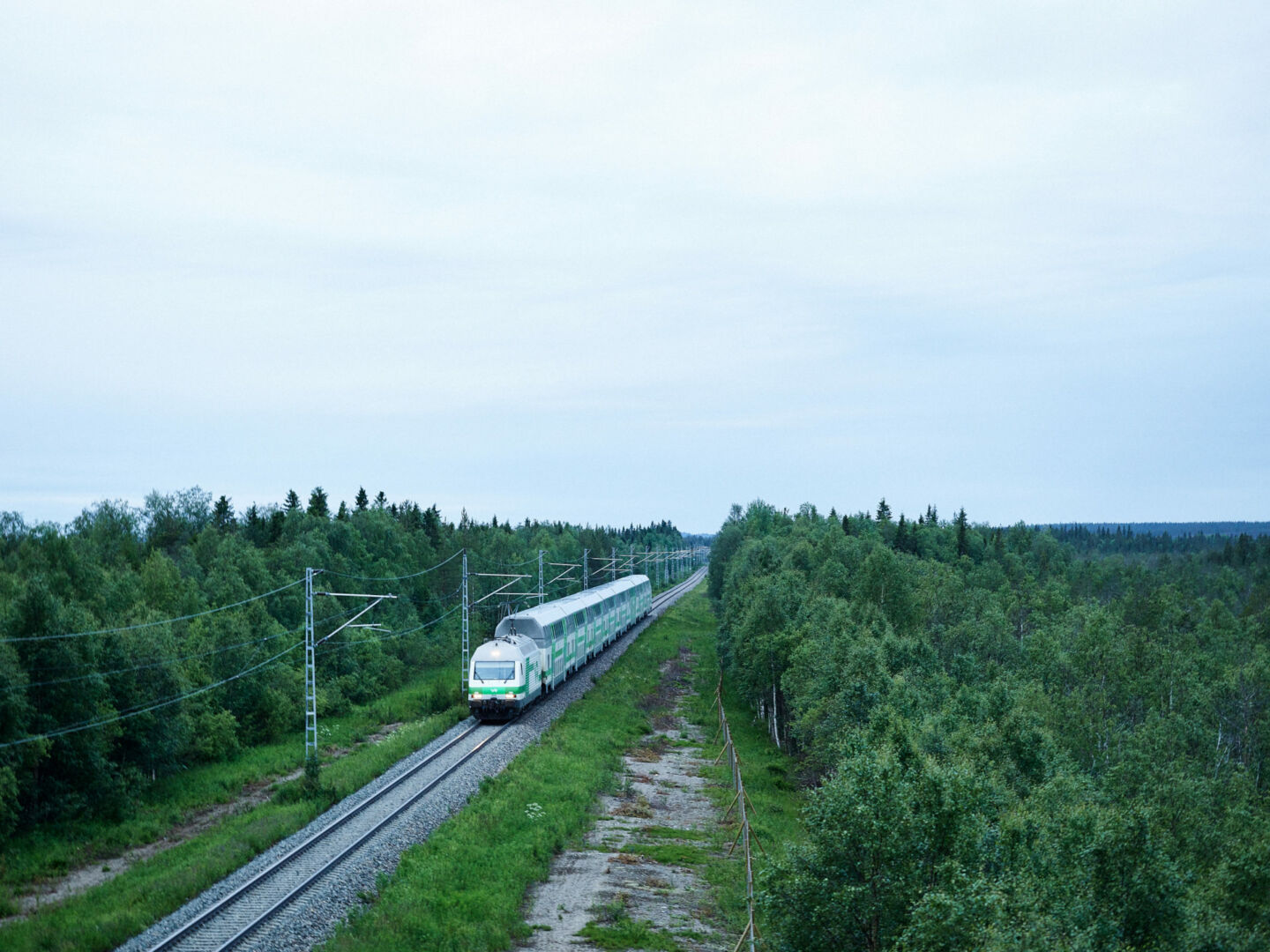
Photo by: Lapland Material Bank | Petri Teppo
It’s not exactly a secret that air travel is one of, if not the, largest factor contributing to a production’s carbon footprint. That’s because air travel’s emissions are so high, they usually outweigh all other concerns. (As confirmed by ALBERT.) Part of your research when developing and implementing your sustainability goals should be considering how much air travel is absolutely necessary. Are there meetings that could be done over the phone or internet? Are there alternative travel options, such as electric train? While we don’t have an extensive train network in Finnish Lapland, it’s very easy to reach Lapland from southern Finland via emission-free electric train. Once you’re here, set up a communication channel for traveling, carpooling, and emission-free transportation, as well as monitoring and calculating the positive or negative impact your production’s travel makes. Hiring local crews is another great way to make drastic cuts to your travel emissions. Lapland is home to many different production companies, with plenty of experienced, environmentally friendly crew.
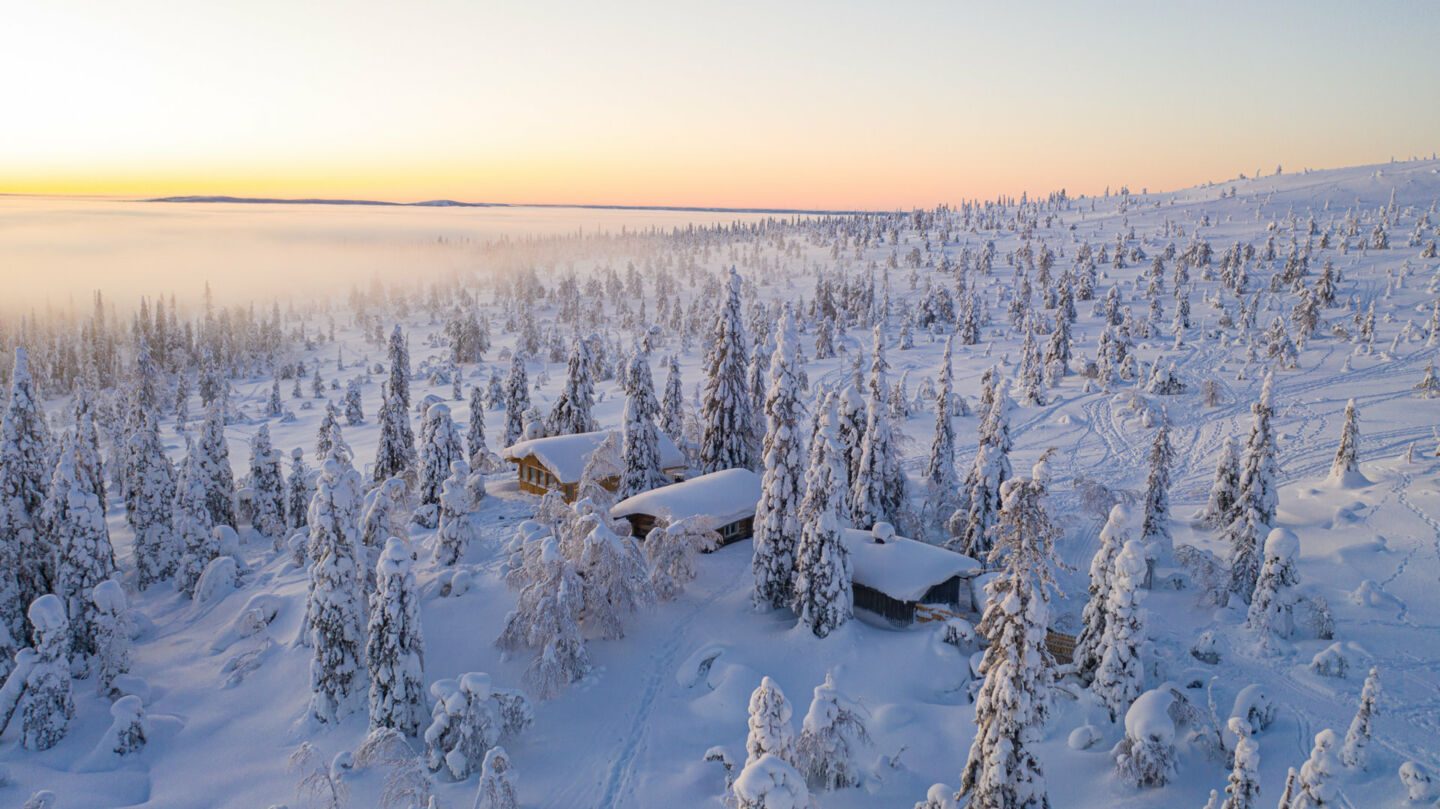
Photo by: Jari Romppainen
Lapland’s most attractive filming locations are natural — so naturally, conservation and good sustainable practices are a must. Some examples from the Ekosetti guidebook:
- Instead of using diesel generators, rent battery-powered generators.
- Request photographs instead of scouting every location in person.
- Establish waste recycling points.
- Leave no trace.
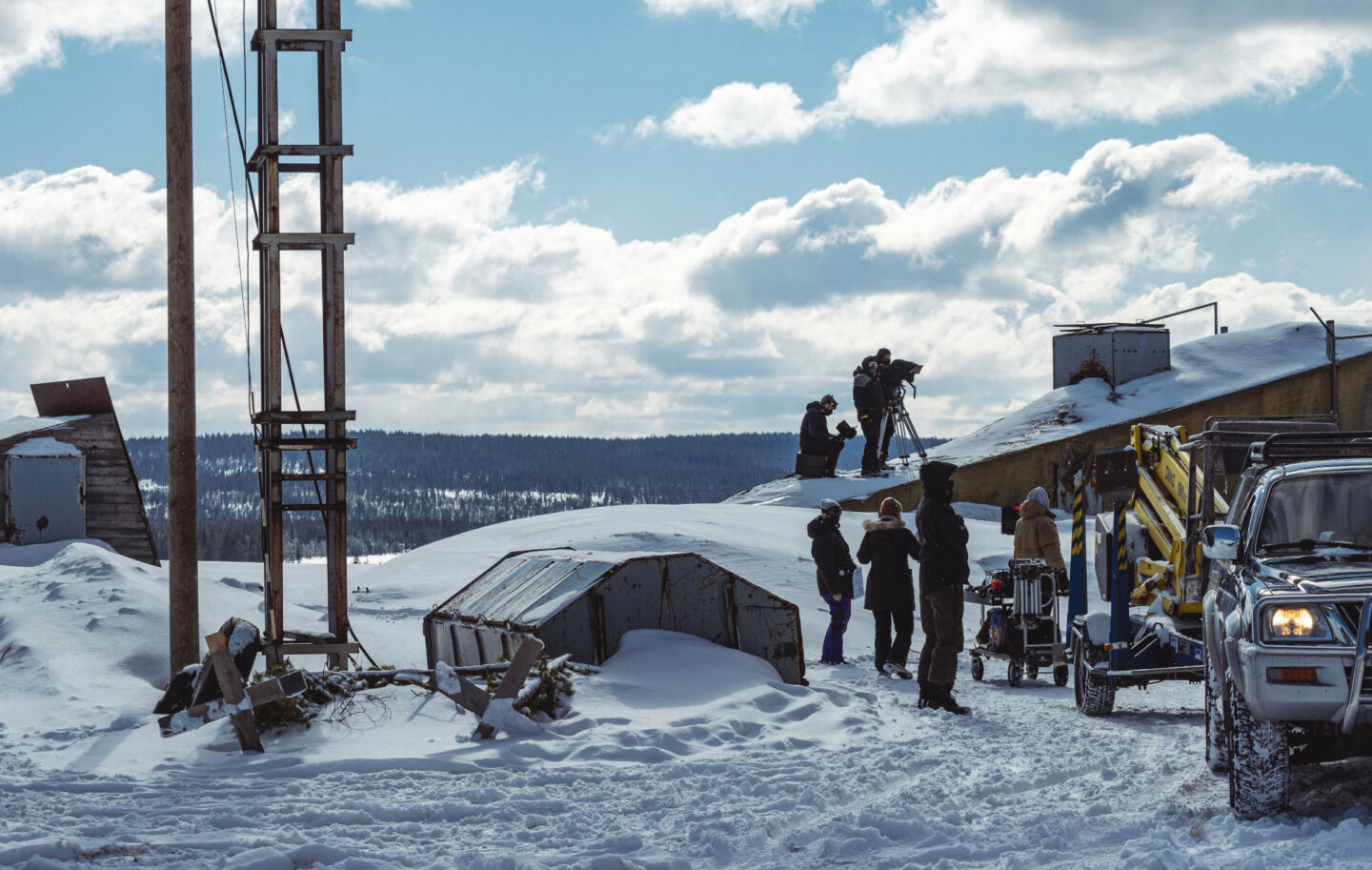
Photo by: Dora Lehtinen, on set of Poromafia in mid-winter
Finally, when talking locations, it’s important to consider your energy consumption. In Finland, about 25% of annual energy consumption goes to heating alone. And if you’re filming in Lapland in the heart of winter, that percentage is likely to be much, much higher for your production. Ekosetti suggests using geothermal heating and heat pumps for the most energy-efficient heating and choosing certified renewable energy that favors solar and wind power. Find out beforehand what the water and electricity consumption of the premises you’re filming and actively set goals for reduction.
CIRCULAR ECONOMY IN LAPLAND
If you’re not familiar with the circular economy, in short, it means sharing, leasing, reusing, repairing, refurbishing and recycling existing materials and products for as long as possible. For example, Finland’s first series to premiere worldwide on Netflix, Dance Brothers, used ALBERT to reduce their carbon footprint by about 80%. One of the ways they did this was by re-using materials from used sets and decorations in producing new ones. In Lapland, this translates to a variety of things:
- Leasing equipment and vehicles rather than transporting them here
- Renting and re-using costumes, props, decorations
- Taking advantage of local support services to ensure your catering and food services are as eco-friendly as possible
Finally, a word on waste. In 2022, the Finnish government amended the Waste Act, bringing Finland largely in line with the rest of the EU. However, there are some provisions where Finland is stricter than the EU, including a few items that are not yet regulated in the EU as a whole. As any production is going to generate some amount of waste, here are a few guidelines:
- You should sort your waste into the following categories: paper, cardboard, glass, metal, plastic, mixed waste, hazardous waste, electrical equipment and batteries, and then dispose or recycle of it properly. Not doing so is not only bad for the environment, but it could also be illegal.
- Undamaged goods are not waste. They can be re-used or resold.
- Do not dispose of trash, food or chemicals into sinks, toilets, sewers or storm drains.
- Ask! Production and support companies are well-versed in their responsibilities under Finnish law. They’ll give you good guidance.
SPOTLIGHT: CLIMATE-FRIENDLY LIFESTYLE
Photo by: Lapland Material Bank | Eeva Mäkinen
In 1968, federal law in the United States mandated seat belts in all new cars. To help familiarize and normalize seat belts, many filmmakers opted to show their characters buckle up every time they got in a car. Later studies show that seat belt use in films correlated with real-world seat belt use. Similarly, Film Lapland encourages productions that film here to portray a climate-positive lifestyle. The film and television industry reaches more eyes than any other industry on Earth; it’s literally what we do. We have a responsibility to showcase eco-friendly living, whether it comes to hiking etiquette, recycling, food choices, etc. in a positive way.
The ALBERT Editorial Tool is fun and quick (less than 5 minutes) and offers inspiration for ways to include more eco-friendly content in your production, complete with case studies.
ADDITIONAL INFO & TOOLKITS
Every day, there seems to be more and more ways to calculate and tabulate all the ways we have impacted the environment and how we can improve. Here we’ve gathered some that are aimed at the film and television industry.
The Nordic Ecological Standard for sustainable film- and TV-production (NES) aims to significantly reduce the environmental footprint of the audiovisual industry in the five Nordic countries.The Nordic Ecological Standard for sustainable film- and TV-production (NES) aims to significantly reduce the environmental footprint of the audiovisual industry in the five Nordic countries.
This English-language guidebook to environmentally sustainable operations, written for the Finnish audiovisual industry contains practical points on how to make domestic productions more environmentally friendly, and its goal is to inspire the industry to adopt a greener production culture.
Your guide to sustainable production. Developed by film industry leaders with environmental expertise, this guide offers tools, resources, and vendors to reduce your production’s environmental impact.
European Booklet for Green Productions
This booklet was developed with the aim of facilitating the adoption of environmentally-sustainable working practices in European AV productions in line with the European Green Deal, emphasizing the importance of active social dialogue to help anticipate and successfully manage environmental challenges.
Green Toolkit Film & TV Database
Explore and consult environmentally sustainable tools and initiatives for the AV industry such as carbon calculators, certifications, trainings, platforms, guides, and other resources that have already been implemented across Europe for AV productions.
Want to make greener productions but don’t know where to begin? This handbook is full of tips, advice and case studies from your peers to help you make sustainable changes to the way you work.
Imagine creating content that sets the cultural agenda in a rapidly evolving entertainment landscape. Content that helps you connect with and grow new audiences. This fun and quick tool will help you do both!
This tool is designed to promote environmental sustainability for AV productions and to guide producers in working in an environmentally sustainable manner. Green Film is also a label that certifies environmental sustainability for AV.
A film commission above ordinary
Film Lapland (Finnish Lapland Film Commission) and the municipality network are more than happy to help bring your production above ordinary. We will help you find the ideal locations, service providers and crew members for your production. Film Lapland is here to make your experience in Finnish Lapland efficient, easy and enjoyable.